Sunday, 27 October 2024

What is a Combustibles Gas Leak Detector? (in 2024)

Discover our highly sensitive Combustibles Gas Leak Detector, featuring the finest Japanese FIGARO gas sensor for detecting even the slightest leaks of various combustible gases, including acetone, acetylene, alcohol, ammonia, benzene, butane, ethanol, gasoline, hexane, methane, naphtha, natural gas, paint thinners, propane, and solvents. This compact, sturdy device, capable of withstanding a 10ft drop, is perfect for homeowners, plumbers, and HVAC professionals to locate natural gas leaks in lines, connections, or appliances.


Commonly used in industrial settings such as underground storage tanks, oil rigs, maritime tanks, and silos, this detector is a must-have for inspectors, utility workers, refinery personnel, maintenance engineers, and technicians, ensuring safety and efficiency in both residential and industrial environments.


Combustible Gases Detected?

Detectable Gases detected by the Natural Gas Leak detector include: Acetone, Acetylene, Alcohol, Ammonia, Butane, Ethanol, Ethylene Oxide, Gasoline, Hexane, Methane, Naphtha, Natural Gas, Paint Thinners, Propane, and various Solvents.

Who Uses a Combustibles Gas Leak Detector?

Several individuals and professionals use natural gas leak detectors for various purposes. Here are some examples:

Homeowners: Homeowners use natural gas leak detectors to ensure the safety of their homes. These detectors are typically used forgas appliances, such as stoves, water heaters, and furnaces, to detect any gas leaks.

Property Managers: Property managers utilize natural gas leak detectors in residential and commercial buildings to protect the occupants and prevent gas-related accidents. These detectors help ensure compliance with safety regulations and provide prompt detection and response to gas leaks.

Utility Companies: Gas utility companies use natural gas leak detectors to inspect their infrastructure, including pipelines and distribution networks. These detectors assist in locating and identifying gas leaks.

Industrial Facilities: Industries that use natural gas as a fuel source, such as manufacturing plants, power plants, and refineries, employ gas leak detectors to monitor their operations. These detectors help prevent potential explosions, fires, or health hazards caused by gas leaks in industrial settings.

Emergency Response Teams: Firefighters, hazardous material response teams, and other emergency response personnel use natural gas leak detectors during gas leak incidents.

Environmental Agencies: Environmental agencies and regulatory bodies may use natural gas leak detectors to monitor and detect gas leaks in natural gas production, storage, and distribution facilities. This helps ensure compliance with environmental regulations and minimize the impact of gas leaks on the environment.
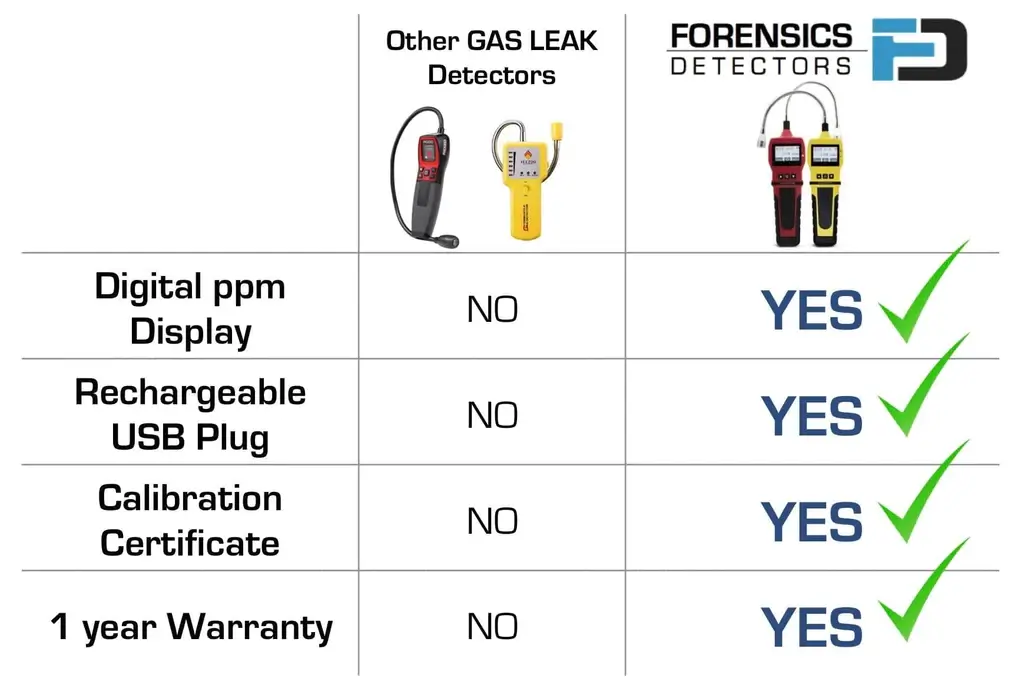
natural gas leak detector


What about Combustibles Gas Bump Testing?

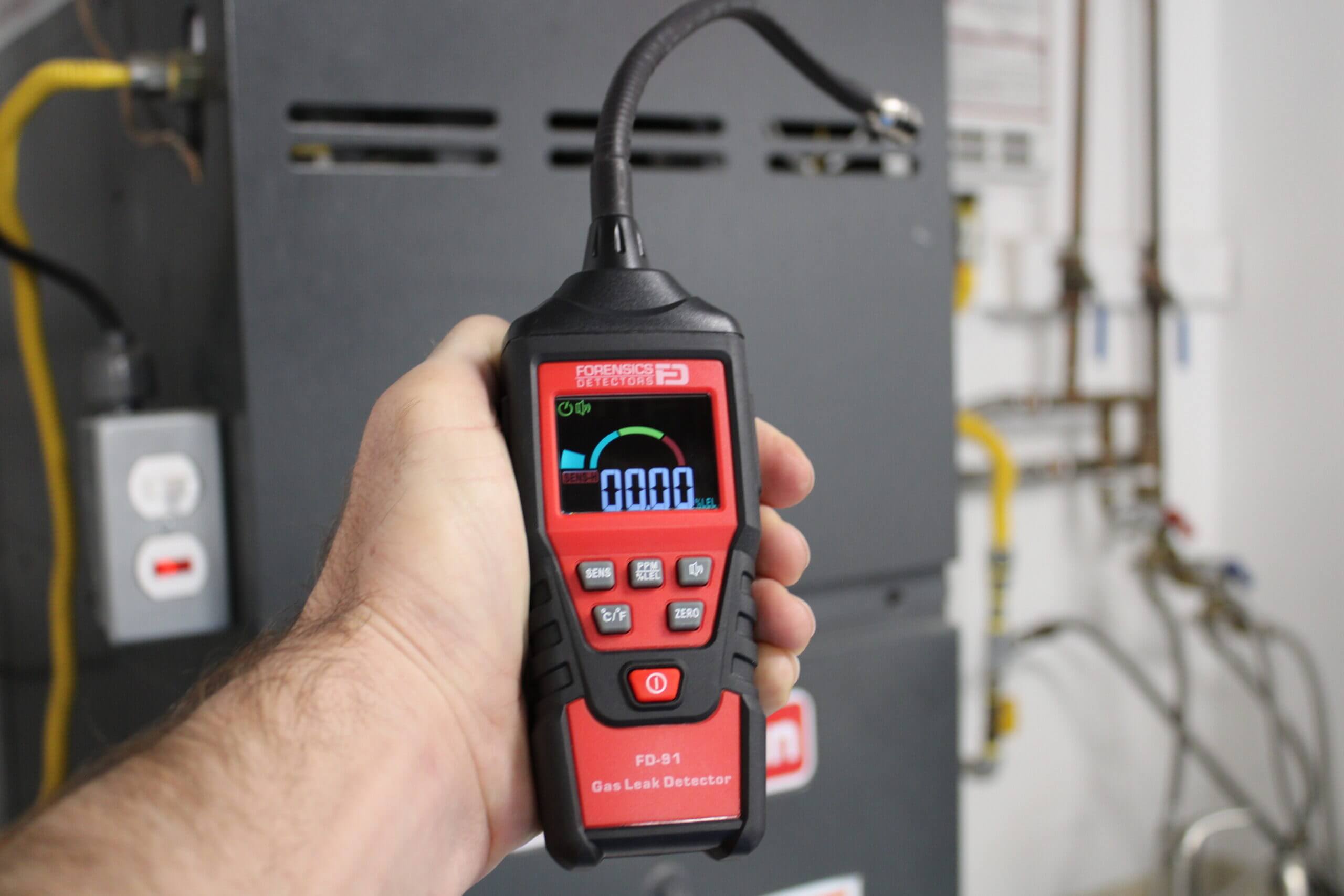
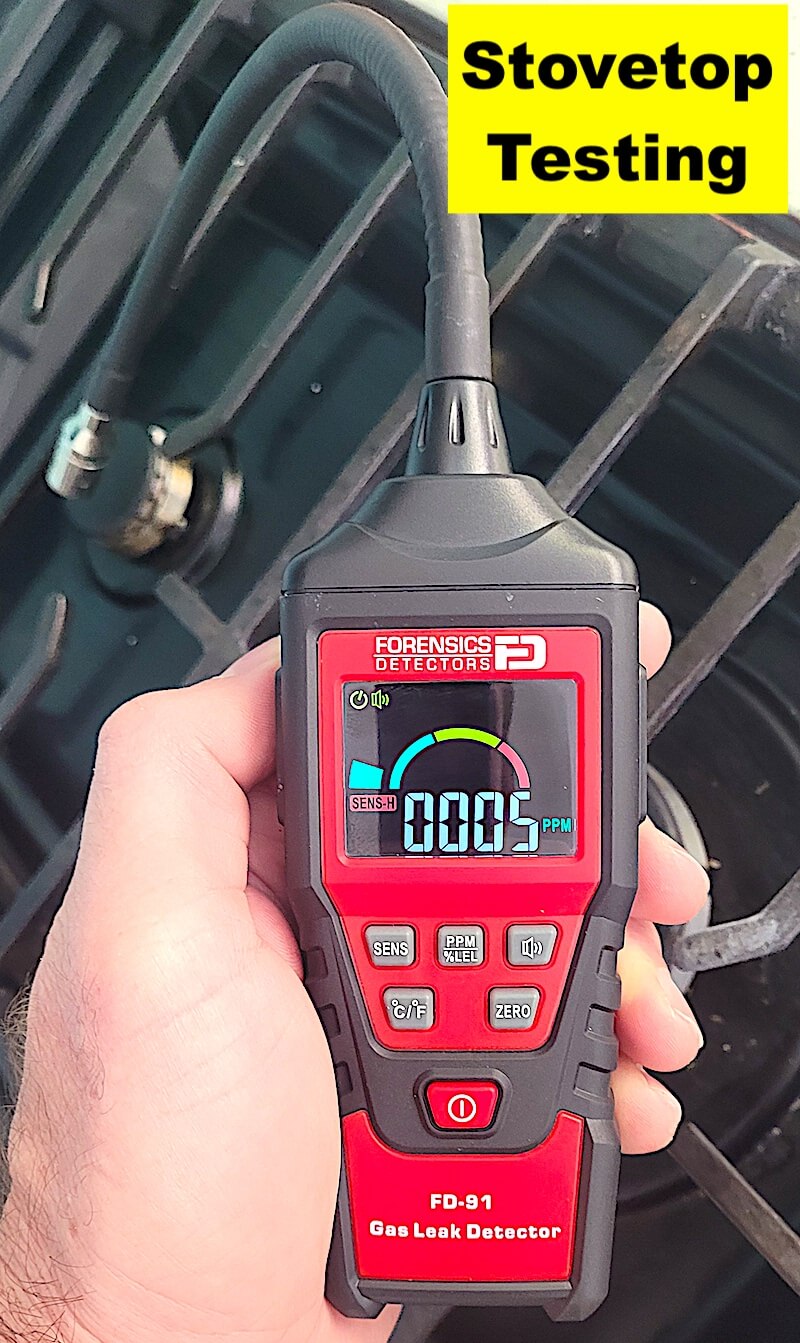
Ensuring the proper operation of your natural gas leak detector is crucial. To confirm its functionality and build confidence, it is recommended to perform a bump test. This involves exposing the gas leak detector to natural gas or methane bump gas, which is sprayed on the sensor to induce a positive response.

If you do not have methane bump gas, you can simply expose the gas sensor to some stovetop gas to induce and confirm a reaction.
natural gas leak detector


What is Combustible Gas?

Combustible gas is a gas that can be ignited and burned in the presence of oxygen. Common combustible gases include methane, propane, butane, hydrogen, and natural gas. These gases are often used as fuels for heating, cooking, and powering engines. However, they can also be dangerous if not handled properly, as they can cause fires or explosions if they leak or are exposed to a spark or flame.
natural gas leak detector

What Does A Combustible Gas Leak Smell Like?

Many combustible gases have no odor, which can make them difficult to detect. However, for safety reasons, an odorant is often added to these gases to make them easier to detect. For example, natural gas is typically odorless, but a chemical called mercaptan is added to give it a distinct sulfur-like odor. Propane, which is commonly used in grills and other appliances, also has a distinct odor added to it. This odor is often described as a "rotten egg" smell. If you smell gas in your home or workplace, it's important to evacuate the area immediately and contact the appropriate authorities.

How to Detect a Combustible Gas Leak?

If you suspect you have a natural gas leak, you should use a tool such as a Natural Gas Leak Detector.

  • Begin by turning on the Combustibles Gas Leak Detector and allowing it to start operating after the countdown.
  • Next, perform a quick bump test to ensure the analyzer is functional. You can do this by exposing it to some natural gas or propane from your stovetop or other controlled source. The point here is to confirm the Gas Leak Detector is indeed operating.
  • Once you have completed the bump test, take the Gas Leak Detector and scan the area of interest, moving about 2 seconds per inch. Be patient and thorough to ensure you capture any natural gas.
  • Typical areas of leakage occur at gas lines, joints, valves, and fittings, as well as around the gas appliances. Make sure to check these locations.
  • Observe the detector's response. The units have a digital readout in PPM and %LEL so it is very sensitive.
  • If you have confirmed a gas leak, ensure you take appropriate action to maximize safety. This may involve turning off the gas supply, evacuating the area, and contacting a qualified professional or emergency services to address the situation.

How Long Does the Combustibles Gas Sensor Last?

Our Combustibles Gas Leak Detector is equipped with a made-in-Japan solid-state thermal semiconducting metal oxide sensor element. This is good news as these sensors have a much longer lifespan than traditional electrochemical gas sensors. In fact, semiconducting metal oxide sensors can last up to 10 years, whereas electrochemical gas sensors and catalytic gas sensors typically last only 2-3 years.

What are Safe Combustible Gas Levels?

The safe levels of combustible gases depend on the specific gas and the environment in which it is present. In general, the safe levels of combustible gases are expressed as a percentage of the lower explosive limit (LEL) or the upper explosive limit (UEL). The LEL is the minimum concentration of gas in the air that can ignite and cause an explosion, while the UEL is the maximum concentration of gas in the air that can ignite and cause an explosion.

It's important to note that even concentrations of combustible gases below the LEL can be dangerous, as they can still pose a fire hazard and may indicate a gas leak. If you suspect a gas leak, it's important to evacuate the area immediately and contact the appropriate authorities.

EXAMPLE:

A natural gas leak can be dangerous as the combustible natural gas can accumulate creating a flammable and explosive situation.

Methane (CH4) is highly flammable and is explosive when levels are between 5% to 15% volume.

Even if the levels do not increase to explosive levels, OSHA has set the permissible exposure limit for methane at 1,000 parts per million (ppm) as a time-weighted average (TWA) for an 8-hour workday. NIOSH has a recommended exposure limit (REL) of 1,000 ppm for methane as a TWA.

Furthermore, we recommend if you do detect ANY gas leak of a combustible, such as natural gas, it MUST be addressed. Otherwise, the leak can increase and cause a major safety hazard.

Will a Combustibles Gas Leak set off Carbon Monoxide Detector?

No, combustibles will not set off a carbon monoxide (CO) detector. Carbon monoxide detectors are specifically designed to detect and alert occupants to the presence of carbon monoxide gas.

Natural gas, on the other hand, primarily consists of methane (CH4) and no trace of carbon monoxide is within it.

How Should I Store my Combustibles Gas Leak Detector?

To ensure maximum sensor life and accurate measurements upon operation, it is recommended to store the Natural Gas Leak Detector in a moderate environment with a humidity level of 50%RH and a room temperature of approximately 70F. The unit should be kept in the hard waterproof case it was sold with for optimal storage conditions.

Conclusion

  • A combustibles gas leak detector is a device designed to find natural gas leaks along gas lines, connections, and appliances.
  • They help identify and locate potential gas leaks to prevent accidents, fires, or explosions.
  • Combustibles Gas Leak Detectors include combustible sensor components that are sensitive to methane, butane, alcohols, gasoline, diesel, propane, and many other everyday combustible gases and vapors.
  • Combustibles gas leak detectors provide visual and audible alarms to alert users when gas concentrations reach potentially hazardous levels.
  • They are used in various settings, including residential homes, commercial buildings, and industrial facilities, and by professionals such as inspectors, technicians, and emergency response teams.

About The Author

Dr. Kos Galatsis ("Dr.Koz") is the President of FORENSICS DETECTORS where the company operates from the scenic Palos Verdes Peninsula in Los Angeles, California. He is a subject matter expert on gas sensor technology, gas detectors, gas meters, and gas analyzers. He has been designing, building, manufacturing, and testing toxic gas detection systems for over 20 years.

gas detector expert

Every day is a blessing for Dr. Koz. He loves to help customers solve their unique problems. Dr. Koz also loves spending time with his wife and his three children going to the beach, grilling burgers, and enjoying the outdoors.

Read more about Forensics Detectors here.

Email:  drkoz@forensicsdetectors.com
Phone: +1 424-341-3886


source https://www.forensicsdetectors.com/blogs/articles/best-combustibles-gas-leak-detector

Sunday, 13 October 2024

What is a Propane Leak Detector? (in 2024)

Discover our highly sensitive Propane Leak Detector, featuring the finest Japanese FIGARO gas sensor for detecting even the slightest propane gas leaks. With adjustable alarm functions including light, sound, and vibration, this device is perfect for a wide range of applications. Inspectors, utility workers, refinery personnel, maintenance engineers, and technicians rely on this detector for home and industrial use.


It's also commonly used in camping, RVing, waterworks, underground storage tanks, oil rigs, maritime tanks, and silos. Whether you're ensuring safety at home or monitoring propane leaks in various industries, this detector is an essential tool for accurate and reliable leak detection.


Which Gases Are Detected?

Detectable Gases detected by the Propane Leak detector include Propane, Acetone, Acetylene, Alcohol, Ammonia, Butane, Ethanol, Ethylene Oxide, Gasoline, Hexane, Methane, Naphtha, Natural Gas, Paint Thinners, and various Solvents.

Who Uses a Propane Leak Detector?

Several individuals and professionals use propane leak detectors for various purposes. Here are some examples:

  • Homeowners: Homeowners who use propane as a fuel source for heating, cooking, or other appliances.
  • Propane Suppliers: Companies or individuals involved in supplying propane gas for residential, commercial, or industrial purposes often use propane leak detectors as part of their safety protocols. These detectors help them identify leaks in storage tanks, pipelines, or other equipment used for propane distribution.
  • Construction and Maintenance Professionals: Contractors, builders, and maintenance personnel who work with propane-powered equipment or appliances, such as construction heaters, forklifts, or grills, use propane leak detectors to ensure the safety of their work environments. These detectors enable them to detect leaks and take necessary precautions to prevent accidents or damage.
  • RV Owners and Campers: People who own recreational vehicles (RVs) or go camping with propane-fueled appliances, such as stoves, refrigerators, or heaters, often carry propane leak detectors as a safety measure. These detectors help them identify any gas leaks within the RV or camping area, allowing them to take prompt action to prevent accidents or gas-related incidents.
  • Industrial Facilities: Various industrial settings, such as manufacturing plants, warehouses, or processing facilities, may utilize propane for heating, power generation, or industrial processes. Propane leak detectors are employed in such facilities to monitor for leaks in propane storage tanks, distribution systems, or equipment, ensuring the safety of workers and preventing potential fire hazards.
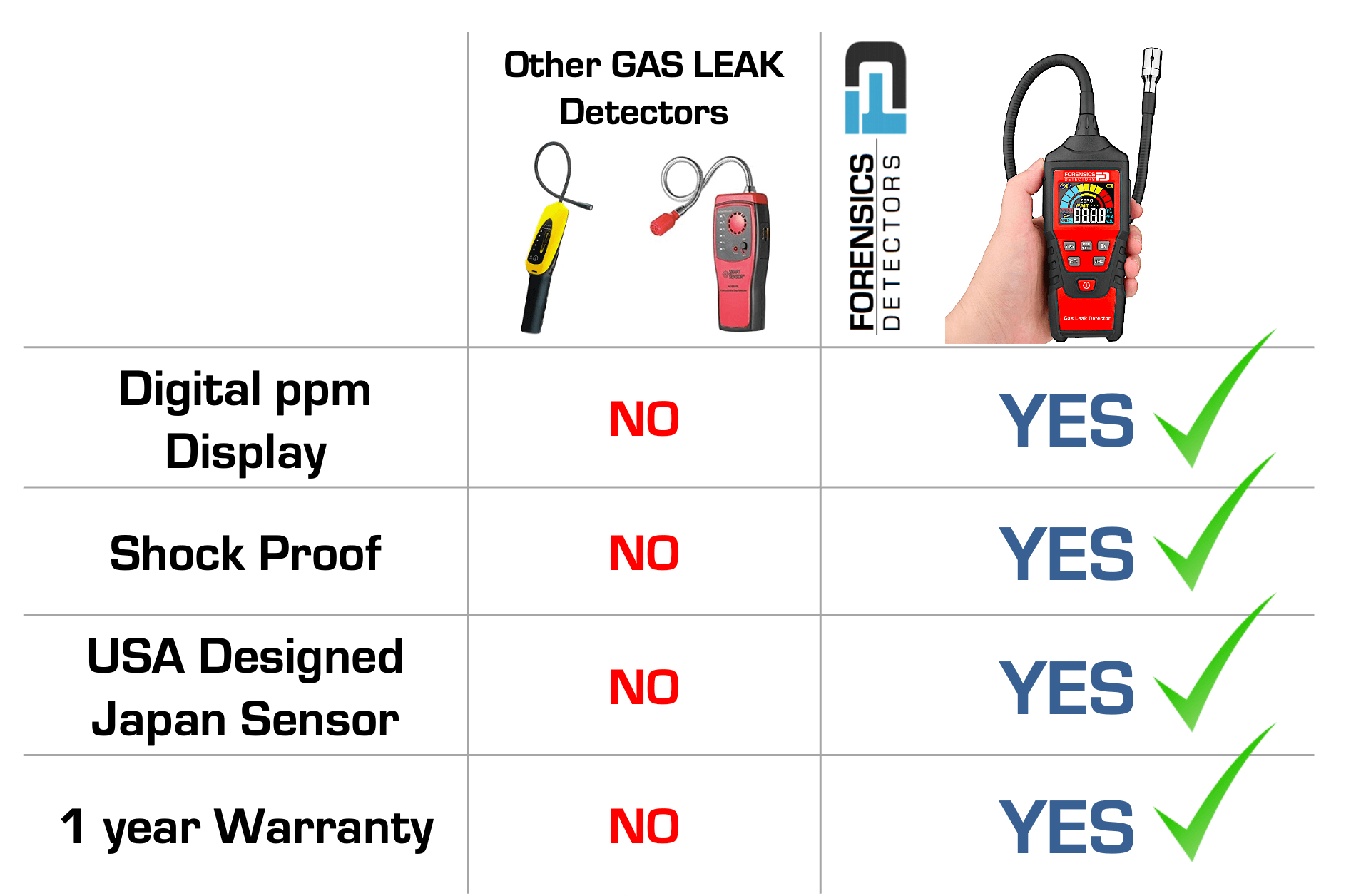
Propane Gas Leak Detector Comparison Table


What about Propane Bump Testing?

Ensuring the proper operation of your propane leak detector is crucial. Does it even work? To confirm its functionality and build confidence, it is recommended to perform a bump test. This involves exposing the leak detector to some propane gas.

Simply expose the gas sensor to some stovetop propane gas to induce and confirm a reaction. If you do not have that, you can use natural gas or another combustible as a surrogate gas.

What is Propane Gas?

Propane gas, also known as liquefied petroleum gas (LPG), is a flammable hydrocarbon gas that is commonly used as a fuel source for various applications. It is derived from natural gas processing and petroleum refining.

Propane is popular for several reasons:

1. Versatility: Propane is a versatile energy source that can be used for various purposes, including heating homes and buildings, cooking, water heating, drying clothes, powering vehicles, and operating appliances such as stoves, ovens, grills, and generators. Its wide range of applications makes it popular among homeowners, businesses, and industries.

2. Clean Burning: Propane is considered a clean-burning fuel compared to other fossil fuels like coal or oil. When burned, it produces lower levels of greenhouse gas emissions and air pollutants such as carbon dioxide, nitrogen oxides, and particulate matter. This cleaner combustion makes it a favorable choice for environmentally conscious individuals and organizations.

3. Energy Efficiency: Propane has a high energy density, meaning it contains a significant amount of energy in a relatively small volume. This characteristic makes it an efficient fuel, allowing for the production of more heat or power per unit of fuel consumed. It provides reliable and efficient energy for various applications, including space heating, water heating, and industrial processes.

4. Portability: Propane is stored and transported in a liquid state under moderate pressure, making it highly portable. This feature is advantageous for applications such as camping, outdoor activities, and remote locations where access to natural gas pipelines may be limited. Propane cylinders and tanks are easily transportable, enabling users to have a readily available fuel source wherever they go.

5. Safety: Propane has built-in safety features that make it a reliable choice. It has a distinct odorant added to it, called ethyl mercaptan, which gives it a strong and unpleasant smell similar to rotten eggs. This odor helps users quickly detect leaks and take necessary precautions. Additionally, propane has a narrow flammability range, meaning it requires specific conditions to ignite, making it less prone to accidental combustion.

6. Cost-Effectiveness: Propane is often competitively priced compared to other fuels, such as electricity, oil, or natural gas. Its availability, efficiency, and favorable pricing make it an economical choice for many residential, commercial, and industrial applications.

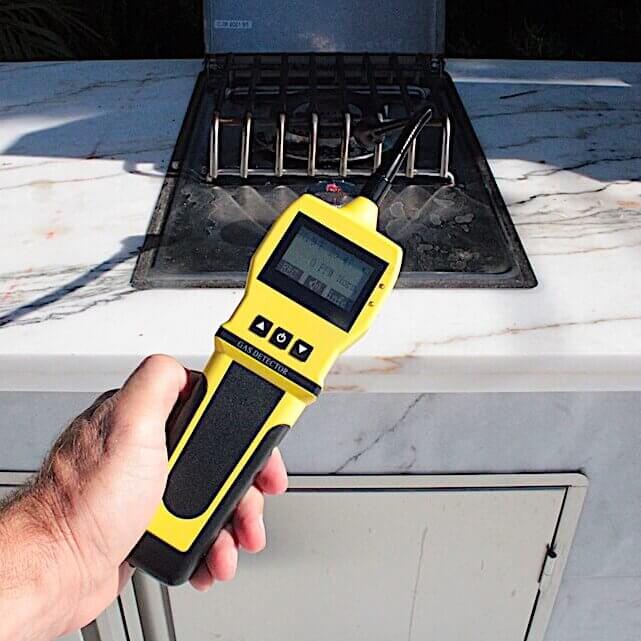
Propane Side Burner Gas Leak


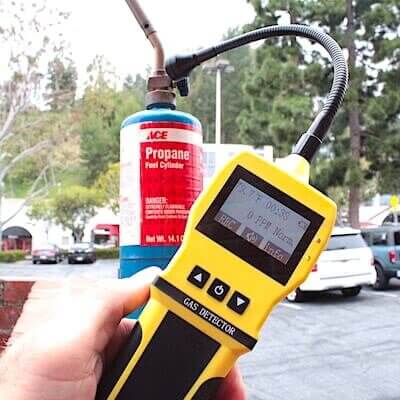
Propane Portable Appliance Gas Leak


What Does A Propane Gas Leak Smell Like?

Propane has a distinctive odor to help detect leaks. Manufacturers add a chemical called ethyl mercaptan to propane, which gives it a strong, unpleasant smell similar to rotten eggs, skunk spray, or sulfur. This odor is deliberately added because propane itself is colorless and odorless, making it difficult to detect without an added scent. The purpose of the odorant is to provide a noticeable warning sign in case of a propane leak, allowing people to identify the presence of the gas and take appropriate action, such as evacuating the area and calling emergency services.

How to Detect a Propane Leak?

If you suspect you have a propane gas leak, you should use a tool such as a Propane Leak Detector.

  • Begin by turning on the Propane Leak Detector and allowing it to start operating after the countdown.
  • Next, perform a quick bump test to ensure the Propane Leak Detector is functional. You can do this by exposing it to some natural gas or propane from your stovetop or other controlled source. The point here is to confirm the Propane Leak Detector is indeed operating.
  • Once you have completed the bump test, take the Propane Leak Detector and scan the area of interest, moving about 2 seconds per inch. Be patient and thorough to ensure you capture any natural gas.
  • Typical areas of leakage occur at gas lines, joints, valves, and fittings, as well as around the gas appliances. Make sure to check these locations.
  • Observe the detector's response in PPM.
  • If you have confirmed a propane leak, ensure you take appropriate action to maximize safety. This may involve turning off the propane supply, evacuating the area, and contacting a qualified professional or emergency services to address the situation.

How Long Does the Propane Gas Sensor Last?

Our Propane Leak Detector is equipped with a made-in-Japan solid-state thermal semiconducting metal oxide sensor element. This is good news as these sensors have a much longer lifespan than traditional electrochemical gas sensors. In fact, semiconducting metal oxide sensors can last up to 10 years, whereas electrochemical gas sensors and catalytic gas sensors typically last only 2-3 years.

What are Safe Propane Gas Levels?

Safe propane gas levels refer to the concentration of propane in the air that is considered safe for human exposure.

Propane may explode when it accumulates in indoors, and it also may suffocate humans.

The Occupational Safety and Health Administration (OSHA) and the National Fire Protection Association (NFPA) have established guidelines for safe propane gas levels in various settings.

OSHA: In a workplace environment where propane is used or stored, OSHA sets the permissible exposure limit (PEL) at 1,000 parts per million (ppm) over an 8-hour workday. This means that the average concentration of propane in the air should not exceed 1,000 ppm during an 8-hour period.

Propane is highly flammable and is explosive when levels are over 2.2% volume (LEL).

We recommend if you do detect ANY propane gas leak it MUST be addressed. Otherwise, the leak can increase and cause a major safety hazard.

Will a Propane Gas Leak set off Carbon Monoxide Detector?

No, a propane gas leak will not set off a carbon monoxide (CO) detector. Carbon monoxide detectors are specifically designed to detect and alert occupants to the presence of carbon monoxide gas.

How Should I Store my Propane Leak Detector?

To ensure maximum sensor life and accurate measurements upon operation, it is recommended to store the Propane Leak Detector in a moderate environment with a humidity level of 50%RH and a room temperature of approximately 70F. The unit should be kept in the hard waterproof case it was sold with for optimal storage conditions.

Conclusion

  • A propane leak detector is a product designed to find propane gas leaks along lines, connections, and appliances.
  • They help identify and locate potential propane leaks to prevent accidents, fires, or explosions.
  • Propane Leak Detectors include combustible sensor components that are sensitive to all combustibles.
  • Our propane leak detector provides visual and audible alarms to alert users when the propane gas concentrations are at potentially hazardous levels.
  • Propane leak detectors are used in residential homes, commercial buildings, and industrial facilities, and by professionals such as inspectors, technicians, and emergency response teams.
  • See other similar products such as our Natural Gas Leak Detector.

About The Author

Dr. Kos Galatsis ("Dr.Koz") is the President of FORENSICS DETECTORS where the company operates from the scenic Palos Verdes Peninsula in Los Angeles, California. He is a subject matter expert on gas sensor technology, gas detectors, gas meters, and gas analyzers. He has been designing, building, manufacturing, and testing toxic gas detection systems for over 20 years.

gas detector expert

Every day is a blessing for Dr. Koz. He loves to help customers solve their unique problems. Dr. Koz also loves spending time with his wife and his three children going to the beach, grilling burgers, and enjoying the outdoors.

Read more about Forensics Detectors here.

Email:  drkoz@forensicsdetectors.com


source https://www.forensicsdetectors.com/blogs/articles/best-propane-leak-detector

Wednesday, 9 October 2024

How Does an NDIR CO2 Sensor Work? (latest in 2024)

Carbon Dioxide sensors are used in many gas sensing and gas detection products, systems and appliances. These are often called CO2 sensors or CO2 NDIR sensors. These sensors are based on a infra red source (lamp) and photodiode that determines how much IR radiation has been absorbed which correlates to the CO2 detected concentration.

Pros

Cons

 Low Cost: Have reduced in size and costs over the past 5 years <$20 each NDIR sensor.

 Applications: Important for indoor air quality, incubator cell control, hydroponics, and safety.

 Lifetime > 5 years: CO2 NDIR sensors last over 5 years.

Size: Can get large and bulky and not as small as a thin film semiconducting metal oxide sensor.

⛔ ppm or %vol: Can measure in PPM or %vol.

 Intregrated to Electronics: Needs extra electronics for integration. CO2 NDIR sensor output can be 4-20mA, UART, PWM or 0-5V.

What is The Principle of Non-Dispersive Infrared?

NDIR stands for nondispersive infrared. It is the most widely used technology for CO2 gas detection. Since CO2 is inert, other chemical techniques (such as electrochemical sensor) cannot be used to sense CO2. These sensors operate by emitting infrared light through a tube or cavity that contains the air sample under test. The air flows towards an optical filter positioned before an IR detector, which measures the light passing through the filter.

NDIR CO2 sensors are designed to emit IR radiation near the 4.26-micron wavelength, which CO2 molecules uniquely absorb.  As light travels through the sample tube, CO2 molecules absorb their characteristic IR wavelength, while other wavelengths pass through unaffected.

At the end of the tube, an optical filter blocks all wavelengths except 4.26 microns. The IR detector then measures the remaining light intensity. The reduction in transmitted IR light correlates directly with the CO2 concentration in the sample, allowing for accurate measurement of CO2 levels.

What Are The Components of an NDIR Sensor?

CO2 IR light source

CO2 IR light source is typically an infrared LED or lamp, emits radiation at specific wavelengths, providing the energy needed for CO2 molecule interactions. The gas sample cell, a chamber through which the sample gas passes, allows infrared light to interact with CO2 molecules. 

Optical Filters & IR Sensor (usually pyroelectric sensor)

Optical filters select specific infrared light wavelengths known to be absorbed by CO2 molecules, ensuring only the 4.26-micron wavelengths reach the IR sensor, thus enhancing measurement accuracy. The detector, a crucial component, measures the amount of infrared light passing through the gas sample after CO2 molecule interaction, with its signal indicating CO2 concentration.

CO2 Pyroelectric Sensor

The principle of a pyroelectric sensor is based on the pyroelectric effect, which occurs in certain materials that generate a temporary electric potential when exposed to a change in temperature. The pyroelectric sensor has a filter to only absorb CO2 at the 4.26 micron wavelength. When the IR enters, it increases in temperature, inversely proportional to the CO2 concentration.


What are 4-series CO2 NDIR sensor?

These are standardized sized CO2 sensors that are used in many CO2 meters, CO2 detectors and CO2 analyzers. They are small, consume less energy can allow for standardized design with UART output signal.

How Is The CO2 Level Calculated? 

The Beer-Lambert Law is fundamental in CO2 detection using infrared sensors and calculating CO2 levels and CO2 concentration. It states that the absorbance of light is directly proportional to the concentration of the absorbing species and the path length of the sample. In CO2 detection, infrared light at a specific wavelength (typically 4.26 μm) passes through a sample chamber. CO2 molecules absorb this light, reducing its intensity. By measuring the difference between the emitted and received light intensity, the sensor can calculate the CO2 concentration. Higher CO2 levels result in greater light absorption, allowing for accurate quantification.

What is the Beer-Lambert Law for CO2 NDIR measurements?

The Beer-Lambert Law equation for CO2 detection can be expressed as:

A = -log(I/I₀) = ε * c * l

Where: A = Absorbance I = Intensity of transmitted light I₀ = Intensity of incident light ε = Molar attenuation coefficient (specific to CO2 at the given wavelength) c = Concentration of CO2 l = Path length of the sample

For CO2 sensors, this is often rearranged to solve for concentration:

c = -ln(I/I₀) / (ε * l)

This equation allows for the calculation of CO2 concentration based on the measured light intensities.

CO2 NDIR Sensor Connecting to Electronics

Electronic engineers use mostly 4 series CO2 NDIR sensor via UART or mA connection. 

UART CO2 NDIR Sensor

UART (Universal Asynchronous Receiver/Transmitter) is a widely used serial communication protocol for connecting sensors to microcontrollers. To connect a UART sensor, first identify the TX (transmit) and RX (receive) pins on both the sensor and the microcontroller. Cross-connect these pins: the sensor's TX to the microcontroller's RX, and the sensor's RX to the microcontroller's TX. Ensure the ground pins are connected. Match the baud rates of both devices for proper communication, and verify that the voltage levels are compatible. With these steps, you can establish a reliable UART connection for data exchange.

4-20mA CO2 NDIR Sensor

The 4-20mA current loop is a standard method for transmitting sensor data in industrial applications. In this system, a sensor converts its measurements into a proportional current between 4mA (representing the lowest value) and 20mA (representing the highest value). To connect a 4-20mA sensor, you typically need a power supply (usually 24V DC) and a resistor. The sensor is connected in series with the power supply and the resistor. The voltage drop across the resistor is measured to determine the current, which can then be converted back to the sensor reading. This method is preferred in industrial settings due to its noise immunity and ability to detect connection faults (as 0mA indicates a broken circuit).

Why Is 4.26 Microns Important For CO2 Detection?

The 4.26-micron wavelength is crucial for CO2 detection in NDIR sensors because it corresponds to a strong absorption band of carbon dioxide molecules. At this specific wavelength, CO2 absorbs infrared radiation very efficiently, creating a unique "fingerprint" for detection. This wavelength is chosen to maximize sensitivity and minimize interference from other gases. When infrared light at 4.26 microns passes through a gas sample, the amount absorbed is directly proportional to the CO2 concentration. This precise targeting allows NDIR sensors to accurately measure CO2 levels even in complex gas mixtures or at low concentrations.

How Do Optical Filters Improve CO2 NDIR Sensor Accuracy?

Optical filters in CO2 NDIR sensors significantly enhance accuracy by isolating the specific wavelength of light absorbed by CO2, typically 4.26 microns. These filters act as selective barriers, allowing only the relevant wavelength to pass through while blocking others. This selectivity reduces interference from other gases or environmental factors that could skew readings. By narrowing the detection range, optical filters increase the signal-to-noise ratio, making the sensor more sensitive to small changes in CO2 concentration. Additionally, they help maintain consistent performance across varying conditions, ensuring reliable measurements in diverse environments and applications.

What Is A Waveguide In a CO2 NDIR Sensors?

A waveguide in NDIR sensors is a specially designed path that directs infrared light from the source to the detector. It's a crucial component that allows for miniaturization of sensors while maintaining accuracy. Waveguides often use reflective surfaces or curved designs to extend the optical path length within a compact space. This extended path increases the interaction between light and CO2 molecules, enhancing sensitivity. Modern waveguides may employ folded optics or innovative shapes like "banana" designs to maximize path length in minimal space. By enabling longer light paths in smaller packages, waveguides have been instrumental in developing compact, yet highly sensitive NDIR CO2 sensors.

What Is The Function Of The Reference Channel in a CO2 NDIR sensor?

The reference channel in NDIR sensors serves as a baseline for accurate CO2 measurements. It typically uses a wavelength not absorbed by CO2, providing a constant signal for comparison. This channel helps compensate for variations in light source intensity, detector sensitivity, and environmental conditions like temperature and pressure. By comparing the measurement channel (absorbing CO2) with the reference channel, the sensor can isolate the effect of CO2 absorption from other factors. This dual-channel approach enhances accuracy, stability, and long-term reliability of the sensor. The reference channel also aids in self-calibration processes, helping maintain sensor performance over time without frequent manual adjustments.

How Do NDIR Sensors Maintain Calibration?

NDIR sensors maintain calibration through several mechanisms. Many incorporate self-calibration algorithms that periodically adjust baseline readings, often using the lowest detected CO2 level over time as a reference point. Dual-channel designs with a reference wavelength help compensate for drift in light source intensity or detector sensitivity. Some sensors use sealed reference cells containing known gas concentrations for comparison. Temperature and pressure compensation algorithms adjust readings based on environmental conditions. Advanced sensors may include automatic baseline correction features. Regular exposure to fresh air can help maintain accuracy in some designs. For high-precision applications, periodic manual calibration using certified gas mixtures may still be necessary to ensure long-term accuracy.

How Do NDIR Sensors Compare To Other CO2 Detectors?

NDIR sensors offer several advantages over other CO2 detection methods. Compared to electrochemical sensors, NDIR sensors have longer lifespans and are less prone to interference from other gases. They're more stable than chemical sensors, requiring less frequent calibration. NDIR sensors are faster and more accurate than thermal conductivity detectors for CO2. While slightly less precise than gas chromatography methods, NDIR sensors are more compact and suitable for continuous monitoring. They're more cost-effective and robust than tunable diode laser sensors for many applications. NDIR technology provides a good balance of accuracy, reliability, and cost, making it the preferred choice for many CO2 monitoring scenarios.

How are CO2 NDIR Sensors Used in Real Life?

They are incorporated into various CO2 detectors, CO2 analyzers and CO2 appliances for various applications. These include:

Final Words

  • NDIR CO2 sensors offer reliable, accurate CO2 measurement using infrared absorption at 4.26 microns.
  • Technological advancements have led to compact, energy-efficient, and versatile sensor designs.
  • Innovations include LED light sources, improved waveguides, and advanced signal processing.
  • Environmental challenges are addressed through compensation algorithms and reference channels.
  • Improved manufacturing processes are making NDIR sensors more accessible and cost-effective.
  • Emerging technologies like photoacoustic spectroscopy promise further miniaturization and sensitivity.
  • NDIR sensors are crucial in various applications, from indoor air quality to industrial process control.

About The Author

Dr. Kos Galatsis ("Dr.Koz") is the President of FORENSICS DETECTORS where the company operates from the scenic Palos Verdes Peninsula in Los Angeles, California. He is a subject matter expert on gas sensor technology, gas detectors, gas meters and gas analyzers. He has been designing, building, manufacturing and testing toxic gas detection systems for over 20 years. 

Everyday is a blessing for Dr. Koz. He loves to help customers solve their unique problems. Dr. Koz also loves spending time with his wife and his three children going to the beach, grilling burgers, and enjoying the outdoors

Read more about Forensics Detectors here.

Email:  drkoz@forensicsdetectors.com
Phone: +1 424-341-3886


source https://www.forensicsdetectors.com/blogs/articles/how-does-an-ndir-co2-sensor-work

Sunday, 6 October 2024

Combustible Gas Detectors (Best in 2024)

A combustible gas detector is a safety device designed to measure the concentration of explosive or flammable gases in the air. It works by detecting the presence of these gases relative to their Lower Explosive Limit (LEL). This tool is crucial for identifying potentially dangerous leaks of various combustible gases, including natural gas, butane, propane, and other hydrocarbons. It's also effective in detecting vapors from flammable solvents and alcohols. By alerting users to the presence of these gases before they reach dangerous levels, combustible gas detectors play a vital role in preventing accidents and ensuring safety in both industrial and residential settings. 

Pros

Cons

 Safety: Protects users from dangers explosive and flammable gas concentrations.

 Compliance: It is a must have for various professionals.

 Real-time monitoring: Catalytic bead sensors are employed to provide immediate and fast responses.

⛔ Cost: Can get expensive, but some low cost options are available.

⛔ ppm or %LEL: Make sure to purchase the correct unit. Some users need ppm, others need %LEL measuring scale.

 Training required: Gas detectors require calibration, bump testing and regular maintenance to ensure maximum safety.

Top 4 Best Combustible Gas Detectors?

Top 4 best combustible %LEL gas detectors used in industry include the following:

What is a Combustible Gas detector?

A combustible gas detector is a safety device designed to identify the presence of flammable gases in an environment. It works by measuring gas concentrations relative to their Lower Explosive Limit (LEL), which is the minimum concentration needed for ignition. These detectors are crucial in various settings, including industrial facilities, homes, and confined spaces. 

Examples of Combustible Gases?

The most popular combustible gases include methane (natural gas), propane, butane, hydrogen, acetylene, ethane, ethylene, carbon monoxide, gasoline vapors, and diesel fuel vapors. Other common flammable gases are ethanol, methanol, ammonia, benzene, toluene, hexane, pentane, isopropyl alcohol vapors, ethyl acetate, and xylene. 

What are the different types of Combustible Gas Detectors?

There are primarily 4 different combustible gas detectors that are available. These are made for different combustible and flammable gas detection application.

Personal Safety Combustible Gas Detectors (measure in %LEL)

These units are used for continuous personal protection and are attached to the belt of body of industrial workers for occupational safety and confined space entry. Most often using the %LEL measuring scale.

Gas Leak Combustible Gas Detectors - Explosimeters (measure in %LEL)

These units are used for indoor spaces, tanks, silos and others confined spaces for explosive, combustible or flammable situations. Used mainly with a detector and probe (with pump). Sometimes there are called explosimeters.

Gas Leak Gooseneck Combustible Gas Detectors (measure in ppm)

These are popular units used by most people to find natural gas leaks at home, propane leaks and other combustible gas leaks. The units is made for small leaks so a more sensitive semiconducting metal oxide gas sensor is used to present the detect concentration in parts per million (ppm). These units are called gas leak detectors.

4 Gas Monitors (EX LEL with other gases)

4 gas monitors are popular personal safety devices used in many industries for occupational safety. 4 gas monitors are often used for confined space entry and includes 4 sensors. CO, O2, H2S and EX. The EX sensor is typically a catalytic bead type sensor detecting and measuring in the %LEL range and most commonly calibrated to methane.

Combustible Gas Sensors?

There are two primary combustible gas sensor that dominate the market and are found in most combustible gas detectors.

1. Catalytic Bead Sensors (most common for %LEL range)

A catalytic bead sensor is a device used to detect combustible gases, and probably the most common type of combustible gas sensor that exists when detecting in the %LEL range. It consists of two beads: an active bead coated with a catalyst and an inactive reference bead. When exposed to flammable gases, the active bead oxidizes them, causing a temperature increase. This change in temperature alters the bead's electrical resistance, which is measured and compared to the reference bead. The difference in resistance is proportional to the gas concentration, allowing for accurate detection of combustible gases.


2. Semiconducting Metal Oxide Sensor (most common for ppm)

A SnO2 Semiconducting Metal Oxide gas sensor is a device that detects the presence of gases in the air. It uses a layer of tin oxide (SnO2), a semiconductor material. When gases come into contact with the SnO2, its electrical conductivity changes. By measuring this change, the sensor can determine the type and concentration of the gases present. This detector is often used for gas leak detection that one looks to measure in the part per million (ppm) range. These sensors are much more sensitive than catalytic bead gas sensors.


How To Use Combustible Gas Detector?

There are two ways to use a combustible gas detector. 

1. Personal Exposure Protection (passive, alarming when ambient is dangerous)

Ensure the device is properly calibrated and functioning correctly. Turn on the detector in a clean air environment and allow it to warm up and zero itself. Clip it to your body. Belt clip or chest pocket. The unit will alarm when the environmenet is dangerous.

1. Gas Leak Detection (active, point sampling and ambient areas)

Ensure the device is properly calibrated and functioning correctly.  Turn on the detector in a clean air environment and allow it to warm up and zero itself. When testing an area, move the detector slowly and steadily, as gases can be present in pockets or layers. For leak testing in pipes, move the sensor 1inch per second. Pay attention to the display and any audible or visual alarms. Note that begin testing at the floor level and move upwards, as many combustible gases are heavier than air. When investigating potential leak sources, move the detector from areas of lower concentration to higher concentration to pinpoint the leak. 

Are Gas Leak Detectors the same as a Combustible Gas Detector?

Gas leak detectors are versatile devices capable of identifying both combustible and non-combustible gases. They can detect a wide range of substances, including benzene, ethylene oxide, gasoline, industrial solvents, jet fuel, lacquer, acetone, alcohol, hydrogen sulfide, propane, and various refrigerants. These detectors serve two primary functions: pinpointing the source of existing leaks and verifying the absence of leaks in a given area. This dual capability makes them essential tools for safety and maintenance in various industrial, commercial, and residential settings.

What Is The Limitation Of A Combustible Gas Detector Of Catalytic Combustion Type?

The most important for catalytic sensors is that these sensors require oxygen to function properly, making them unreliable in oxygen-deficient environments. (less than 10 %vol) High gas concentrations can damage the sensor, potentially leading to inaccurate readings or sensor burnout. Catalytic sensors may also experience drift over time, necessitating regular calibration. They can be cross-sensitive to other combustible gases, potentially giving false readings if multiple gas types are present. These detectors typically have a limited lifespan of 2-5 years due to sensor degradation. 

What Are Combustible Gases?

Combustible gases are flammable gaseous substances that can ignite and burn when mixed with air (oxygen) in the presence of an ignition source. These gases are characterized by their ability to reach their flash point and ignition temperature relatively easily under normal atmospheric conditions. Common examples include methane (natural gas), propane, butane, hydrogen, acetylene, and various hydrocarbon vapors. In industrial settings, combustible gases can also include by-products of manufacturing processes or decomposition of materials. The danger of combustible gases lies in their potential to form explosive mixtures with air within specific concentration ranges, known as the explosive range or flammable range. This range is defined by the Lower Explosive Limit (LEL) and Upper Explosive Limit (UEL). Combustible gases pose significant safety risks in many industries and domestic settings, necessitating careful monitoring, proper ventilation, and safety measures to prevent accidents, fires, and explosions.

What Is The Difference Between Combustibles, Flammable And Explosive Gases?

While often used interchangeably, there are subtle differences between combustible, flammable, and explosive gases. Combustible gases are those capable of burning when mixed with air and ignited, but they typically have a higher ignition point. Flammable gases are a subset of combustible gases that ignite easily at ambient temperatures, generally with a flash point below 100°F (37.8°C). All flammable gases are combustible, but not all combustible gases are flammable. Explosive gases refer to gases that can rapidly expand and release energy in a violent manner when ignited. In practice, many gases can be both flammable and explosive depending on their concentration in air. The key difference lies in how quickly and violently the combustion occurs. Flammable gases burn, while explosive gases detonate. 

What is the Maintenance Schedule for a Combustible Detector?

Most combustible gas detectors require the following maintenance schedules that are important to ensure, operation, accuracy, and safety.

  1. Bump Testing (weekly to monthly, sometimes even daily)
  2. Calibration Schedule (every 12 months)
  3. Replacement Schedule (2-3 year sensor replacement, some may be extended up to 5 years, check with the manufacturer)

Conculsions

In conclusion, combustible gas detectors are essential safety devices that measure the concentration of flammable gases relative to their Lower Explosive Limit (LEL). They come in various types, including personal safety detectors, gas leak detectors, and 4-gas monitors, utilizing either catalytic bead or semiconducting metal oxide sensors. While these detectors offer crucial safety benefits and real-time monitoring, they require proper training, regular maintenance, and calibration. Understanding the differences between combustible, flammable, and explosive gases is vital for their effective use. Despite some limitations, combustible gas detectors remain indispensable tools for preventing accidents in both industrial and residential settings.

About The Author

Dr. Kos Galatsis ("Dr.Koz") is the President of FORENSICS DETECTORS where the company operates from the scenic Palos Verdes Peninsula in Los Angeles, California. He is a subject matter expert on gas sensor technology, gas detectors, gas meters, and gas analyzers. He has been designing, building, manufacturing, and testing toxic gas detection systems for over 20 years.

gas detector expert

Every day is a blessing for Dr. Koz. He loves to help customers solve their unique problems. Dr. Koz also loves spending time with his wife and his three children going to the beach, grilling burgers, and enjoying the outdoors.

Read more about Forensics Detectors here.

Email:  drkoz@forensicsdetectors.com


source https://www.forensicsdetectors.com/blogs/articles/combustible-gas-detectors

4 Gas Meter for Confined Space (Best in 2026)

A 4 gas meter for confined space is an essential gas detection device designed to simultaneously measure carbon monoxide (CO), oxygen (O2), ...